
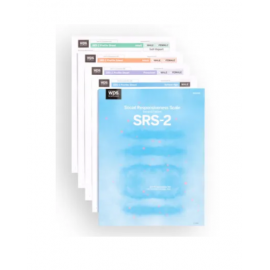
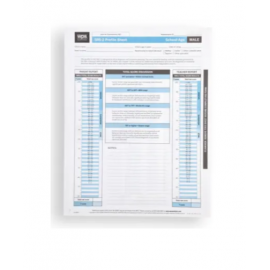
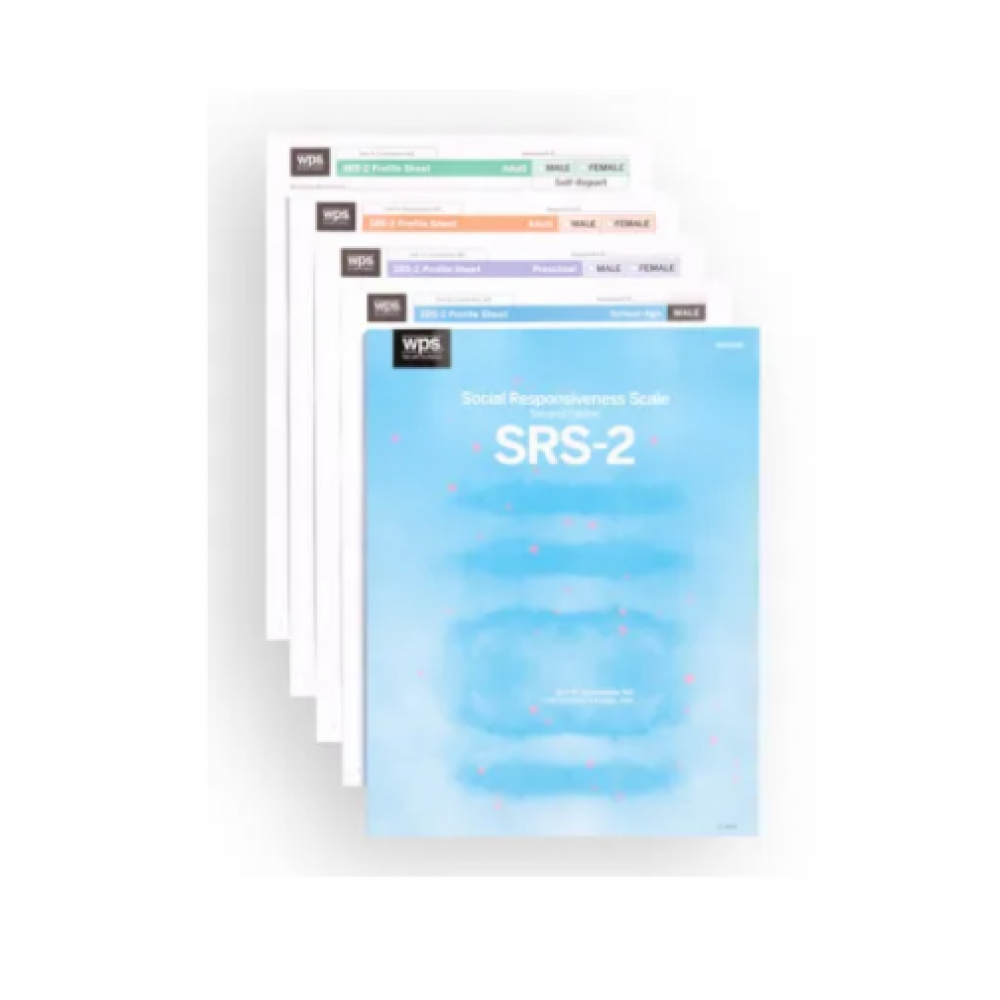
(SRS™-2) Social Responsiveness Scale, Second Edition
Product Description
Benefit
Identifies the presence and severity of social impairment within the autism spectrum and differentiates it from that which occurs in other disorders
Norms
Provided separately for each form; based on sample of 1,906 individuals (4,709 ratings); nationally representative in regard to gender, ethnicity, education, and geographic region; separated by rater type as well as age and gender of individual rated
Scores
Total Score; Scores for 5 Treatment Subscales; Scores for 2 DSM-5 Compatible Subscales
Format
Parent and/or teacher rating scale for 2 years, 6 months through 18 years; adult self-report and other-report for ages 19 and up
Admin Time
15-20 minutes
Ages
2 years, 6 months through adulthood
Publish Date
2012
Qualifications
Level C required.
The second edition of this highly regarded autism assessment offers the convenience of a screener and the power of a diagnostic tool. Completed in just 15 to 20 minutes, the SRS-2 identifies social impairment associated with autism spectrum disorders (ASDs) and quantifies its severity. It’s sensitive enough to detect even subtle symptoms, yet specific enough to differentiate clinical groups, both within the autism spectrum and between ASD and other disorders. With its expanded age range, the SRS-2 can monitor symptoms throughout the life span.
Assess Social Impairment in Natural Settings–and From More Than One Perspective
The SRS-2 offers four forms, each with 65 items, and each for a specific age group:
School-Age Form: for ages 4 through 18, completed by parent or teacher (composed of the same items that appeared on the original SRS)
Preschool Form: for ages 2½ to 4½, completed by parent or teacher
Adult Form: for ages 19 and up, completed by relative or friend
Adult Self-Report: Form for ages 19 and up
While some autism tests require trained professionals to code behaviors observed in clinical settings, the SRS-2 asks teachers, parents, and others to rate symptoms that they’ve noticed —at home, in the classroom, or elsewhere- over time. Raters evaluate symptoms using a quantitative scale representing a range of severity.
This approach—multiple perspectives on behavior observed in natural settings and rated on a graduated response scale—uncovers a wide range of symptoms, including relatively subtle ones. The SRS-2 often reveals aspects of social functioning missed in a clinical context with its “yes-or-no” response format. This is important because even mild social impairment can adversely affect children and adults. Numerous independent studies demonstrate that the SRS-2 is unmatched in its ability to measure the severity of social impairment in the mildest and most common forms of ASD—including Social Communication Disorder, a new diagnosis in DSM-5.
Use the SRS-2 Treatment Subscales to Guide Intervention
In addition to a Total score reflecting the severity of social deficits in the autism spectrum, the SRS-2 generates scores for five Treatment subscales:
- Social Awareness
- Social Cognition
- Social Communication
- Social Motivation
- Restricted Interests and Repetitive Behavior
Although not used for screening or diagnosis, subscale scores help in the design and evaluation of treatment programs.
Similarly, the SRS-2 unlimited-use scoring program provides detailed reports with information useful for intervention.
Compare Symptoms to DSM-5 Criteria for ASD
In addition to the Treatment subscales described above, the SRS-2 offers two new DSM-5–compatible subscales:
- Social Communication and Interaction
- Restricted Interests and Repetitive Behavior
Scores on these subscales make comparing clients' symptoms to DSM-5 diagnostic criteria for Autism Spectrum Disorder easy. Such comparisons inform diagnosis—determining whether the individual meets the current diagnostic criteria for ASD.
Simplify Differential Diagnosis
The SRS-2 has gained support from several independent, peer-reviewed studies conducted internationally in schools and clinics involving diverse populations and diagnostic groups. These studies show that the SRS-2 discriminates both within the autism spectrum and between ASD and other disorders—making the test highly useful for differential diagnosis. When the SRS-2 reveals social deficits associated with autism, it tells you exactly where these symptoms fall on the spectrum. And when the test indicates that autism is not present, it often points to other conditions in which social impairment plays a role.
SRely on the SRS-2 in Educational, Clinical, and Research Settings
The brevity and sensitivity of the SRS-2 make it useful for a variety of assessment needs in clinical research and educational settings. Its quantitative nature and wide age range make it ideal for measuring response to intervention over time. It is crucial in all of these settings to isolate autism spectrum disorders from other psychiatric conditions, and the SRS-2 is well suited to this purpose. It clearly distinguishes the social impairment characteristic of ASD from that seen in ADHD, anxiety, and other diagnoses.
SRS-2 Online Now Available!
The SRS-2 can now be administered and scored through the WPS® Online Evaluation System™, offering an efficient and convenient way to use this powerful assessment. Online testing allows clinicians to:
- Administer the SRS-2 locally or remotely
- Email online forms directly to raters
- Print Response Sheets for parents without internet access
- Check the status of an administration at any time
- Consume an online form only when you score it—never lose a print form again!
- Score online forms and create reports automatically with the click of a button
- Share reports easily—send by email, save as PDF, or print
- Monitor an individual’s symptoms over time
- Spanish forms include item translations only. U.S. normative scores are used and the manual is available in English only.
Terms often used to search for (SRS™-2) Social Responsiveness Scale™, Second Edition
SRS 2 test, social responsiveness scale 2, social responsive scale 2, template, scoring, sample report, age range, interpretation, pdf
| W-608 | SRS-2 Hand-Scored Kit | Email for quotation |
| W-608A | SRS-2 School-Age AutoScore Form, for Ages 4-18 Years (Pack of 25) | Email for quotation |
| W-608B | SRS-2 Preschool AutoScore Form, for Ages 2.5-4.5 Years (Pack of 25) | Email for quotation |
| W-608C | SRS-2 Adult (Relative/Other Report) AutoScore Form (Pack of 25) | Email for quotation |
| W-608D | SRS-2 Adult (Self-Report) AutoScore Form (Pack of 25) | Email for quotation |
| W-608M | SRS-2 Manual | Email for quotation |
| W-609 | SRS-2 Child/Adolescent Hand-Scored Kit | Email for quotation |
| W-610 | SRS-2 Adult Hand-Scored Kit | Email for quotation |
When you order from google.com, you will receive a confirmation email. Once your order is shipped, you will be emailed the tracking information for your order's shipment. You can choose your preferred shipping method on the Order Information page during the checkout process.
The total time it takes to receive your order is shown below:

The total delivery time is calculated from the time your order is placed until the time it is delivered to you. Total delivery time is broken down into processing time and shipping time.
Processing time: The time it takes to prepare your item(s) to ship from our warehouse. This includes preparing your items, performing quality checks, and packing for shipment.
Shipping time: The time for your item(s) to tarvel from our warehouse to your destination.
Shipping from your local warehouse is significantly faster. Some charges may apply.
In addition, the transit time depends on where you're located and where your package comes from. If you want to know more information, please contact the customer service. We will settle your problem as soon as possible. Enjoy shopping!